
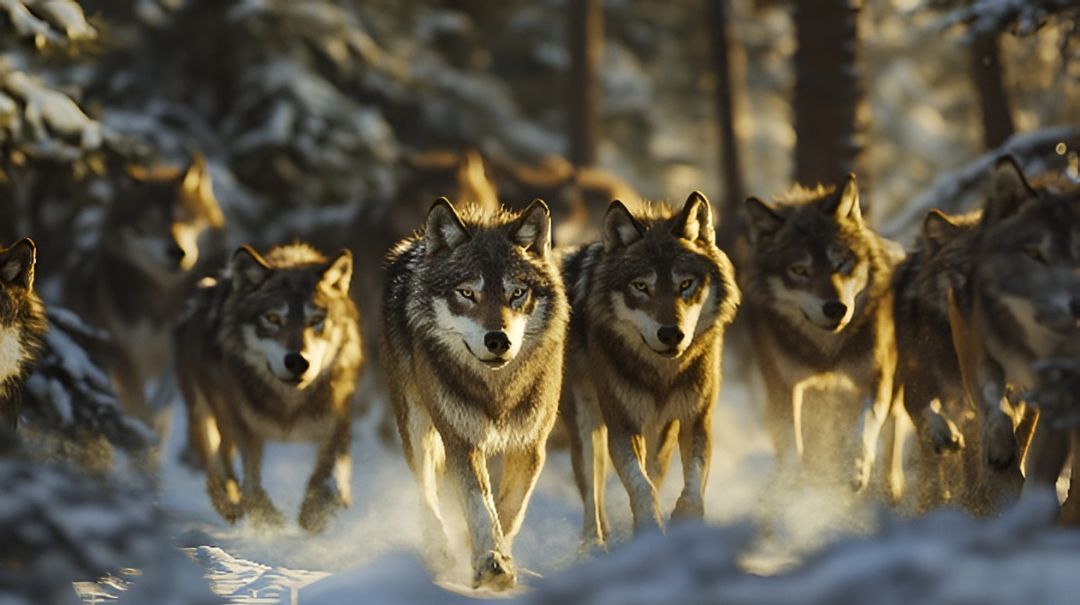
The context
Wolves operate in harsh, resource-scarce environments where survival depends on successfully hunting large, fast prey. Individually, they are capable hunters, but it is their ability to work as a coordinated unit that enables them to take down animals far larger than themselves.
The key opportunity and threat
- Opportunity – to achieve outcomes collectively that would be impossible individually
- Threat – poor coordination, miscommunication, or breakdown in trust leading to failed hunts and wasted energy
What they do that is special
Wolf packs demonstrate a highly coordinated, trust-based team model:
- Operate with a clear hierarchy, providing direction and stability, but with flexibility in roles depending on the situation
- Use constant, subtle communication (body language, positioning, vocal signals) to coordinate movement
- Execute hunts through carefully timed, complementary roles—some drive, others flank or intercept
- Build deep trust through repeated collaboration, enabling instinctive coordination under pressure
- Share the rewards of success, reinforcing collective over individual gain
For example…
When hunting large prey such as elk, wolves do not attack immediately. Instead, they work together to isolate a weaker animal from the herd. Some wolves apply pressure from behind, while others position themselves ahead to anticipate movement.
As the prey tires, the pack closes in, each wolf adjusting its role dynamically based on the behaviour of the others. There is no central command in the moment, just highly attuned, coordinated action built on trust and experience.
The success of the hunt depends entirely on timing, positioning and teamwork—not individual strength.

This enables wolf packs to consistently achieve outcomes far beyond individual capability
Clarity of roles – how clear are roles within your teams, and how flexibly can they adapt when needed?
Trust under pressure – how much do your teams rely on each other in critical moments?
Coordination – how effectively do individuals work together in real time, rather than in sequence?
Communication quality – how clear, timely and actionable is communication during execution?
Collective mindset – how strongly are incentives and rewards aligned to team success?
Leadership balance – does leadership provide direction without over-controlling execution?
Ambition gap – if this level of coordination is possible instinctively, what is preventing it in your teams?